I used to be sceptical of the archetype section in a brand strategy. Dubious, if I’m honest. A bit fluffy. A bit conceptual — the kind of slide clients nodded politely at before we moved on to the parts that felt more “real.”
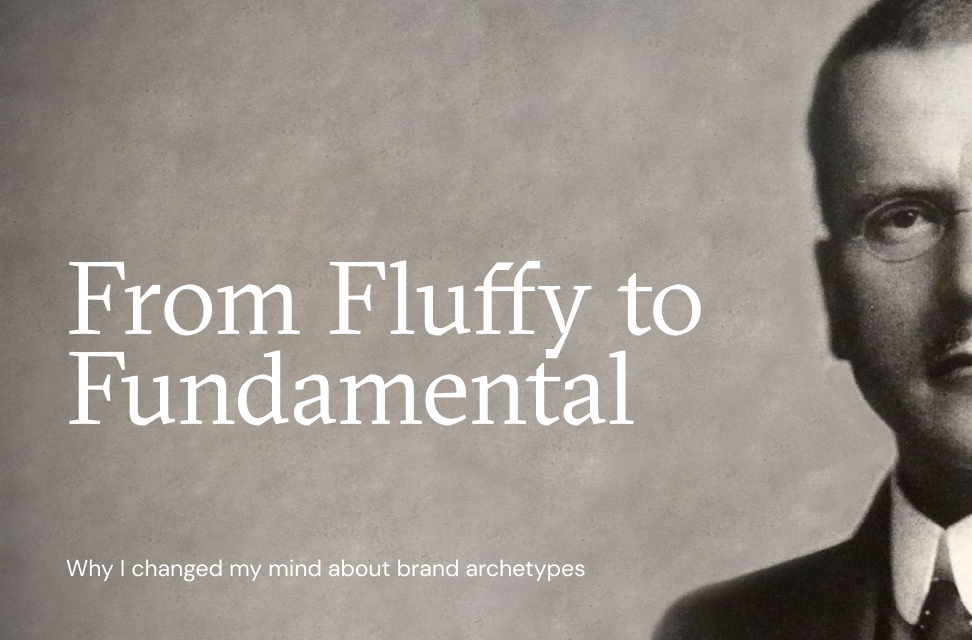
For those unfamiliar, archetypes come from Carl Jung’s theory of the collective unconscious. The idea that certain characters feel instantly familiar because they’re instinctive to us. We have a shared understanding of what it means to be the hero, or the sage, or the jester. In brand strategy, we use these to shape a brand’s personality, essentially how a brand expresses itself – how it sounds, how it looks, the tone it takes across all it’s touchpoints. And for a long time, that’s where I thought the value stopped.
What changed my mind
Here’s what shifted for me: archetypes aren’t only an external signal. They’re an internal compass.
The real value isn’t just in how the brand looks to donors or funders. It’s in how the team behaves when there’s tension. When the board won’t get on board. When a decision has to be made and there’s no precedent to lean on.
That’s where the archetype can shine!
Why it works in the room, not just on the page
Everyone in a meeting already has an intuitive sense of what “the Hero” would do, or how “the Sage” would respond to conflict. That shared understanding is what makes the archetype useful in practice, not just in theory.
“Let’s come at this as the Hero” can reframe a stuck conversation faster than any strategy deck. It works because the suggestion isn’t coming from any one person’s opinion in the room. It’s coming from the brand itself , something the whole team has already agreed to be.
For not-for-profits especially, where boards, staff, and volunteers often pull in different directions with the best of intentions, that shared reference point matters. It’s less about consistency of message and more about alignment of behaviour – a subtle but important distinction when everyone in the organisation is trying to do right by the same cause, often without a shared playbook for how.
Archetypes were never just about sounding a certain way. Used well, they’re a tool for realigning a room, not just a brand. Turns out, way less fluffy than I thought!